Project Dates: 2020-2025
Funding: Social Sciences and Humanities Research Council Insight Development Grant
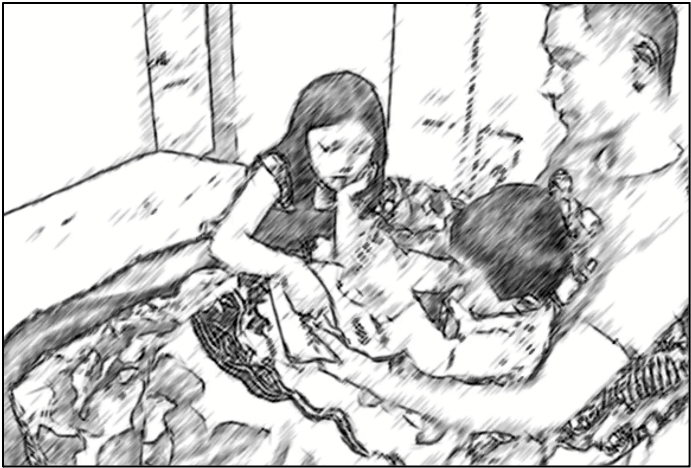
Problem: Tibetan refugees living in Canada have built thriving communities, centered on Buddhist monasteries that share their cultural traditions with their Canadian neighbours. As the next generation of Tibetan-Canadian children grows up, they maintain Buddhist cultural practices. However, they struggle to continue using their mother tongue. Language shift, or the abandonment of Tibetan for English, persists despite the widespread celebration of multilingualism and multiculturalism in Canada. Furthermore, public support for multiculturalism has led to the creation of extensive services for newcomers to Canada. Examples include government-provided early childhood literacy programs that prepare young children for public school, as well as community-based heritage language schools that aim to support children’s continued use of Tibetan. The persistence of language shift despite these incredible investments in multilingual and multicultural education required further inquiry, in order to understand how to best preserve the Tibetan language in Canada.
Research Process: Long-term ethnographic inquiry into the lifeworlds of Tibetan-Canadians required mixed methods. Through video ethnography, I documented the language use of children in two families over the period of one year. Using methods from conversation analysis, I transcribed and analyzed patterns in their language use. Conversation analysis revealed the importance of literacy to maintaining Tibetan language. When children read and wrote, they commented on the Tibetan language, repeating words and considering equivalencies between Tibetan and English. That is, even when they used English, they focused attention on Tibetan language forms, which supported their continued learning of the heritage language. Community-based programs, such as early literacy initiatives, provided ideas for parents to create semi-structured reading and writing activities at home, and therefore helped parents use Tibetan with their children. Literacy practices, even when they seemed to focus on English, supported children’s use of Tibetan.
To provide context to findings from these two families, I conducted ethnographic interviews with fifteen adults. Qualitative coding of the interviews further emphasized the importance of literacy. Adults connected literacy to the ability to read Buddhist prayers and literature. In short, interviews suggested that literacy in Tibetan provided a focal point for a shared cultural identity.
Given the significance of literacy in home language practices and interviews, I aimed to understand children’s experiences of learning to read and write in Tibetan. I conducted participant observation in a Tibetan heritage language school in Vancouver, and performed qualitative coding of fieldnotes. Participant observation confirmed that reading and writing activities provided a foundation for children to use Tibetan. At the same time, volunteer heritage language teachers struggled to develop resources for literacy instruction. While many teachers were highly skilled in traditional teaching methods used in Tibetan schools, they expressed a desire to align their classroom practices with the norms of Canadian schools.
The need for more classroom resources prompted an additional community-based research component. I worked with heritage language teachers to identify desires for professional development. In line with other Tibetan schools in diaspora, the teachers requested training in SEE Learning®, a framework that draws from Buddhist ethical principles to support children’s holistic development. I completed a certificate in SEE Learning® to share insights with the community. However, SEE Learning® is not tailored to language education. In response to this gap in opportunities for professional development, I created and facilitated a three-day-long training workshop that connected principles of SEE Learning® with up-to-date research on multilingual children’s language acquisition.
Impact: Findings on the relevance of literacy to Tibetan heritage language education are under review in scholarly journals. My community-engaged workshop was attended by more than sixty participants, and featured in the academic magazine Anthropology News. I used an impact assessment of the workshop to create a manual of best practices for Tibetan heritage language teachers.
 Shannon M. Ward, Ph.D.